Published Date
September 30, 2026
Author
Aarvak Diagnostics
Read Time
8 min
Category
Corporate Health
Food Handler Medical Fitness Certificate (FSSAI): A Guide for Restaurants, Hotels and Caterers in Gurugram
Quick answer: Under FSSAI's hygiene and sanitation requirements (Schedule 4 of the Food Safety and Standards licensing regulations), licensed food businesses must ensure food handlers are medically examined at least once a year by a registered medical practitioner, keep the medical fitness certificate on record, and keep anyone with an infectious illness away from food handling. Tests commonly included are a physical examination, stool examination, CBC, and as advised typhoid screening and a chest X-ray, along with checking vaccination status such as typhoid.
Gurugram's restaurant, hotel, cloud-kitchen and catering sector employs thousands of food handlers. During FSSAI inspections and client audits, missing or expired medical certificates are one of the most common non-conformities. The fix is straightforward — an annual medical for every food handler, documented properly.
Aarvak Diagnostics has supported occupational health checks for food and retail brands and hospitality groups. Here's how to run it efficiently.
Who Counts as a Food Handler?
Anyone who directly handles food or surfaces that touch food:
- Cooks, kitchen helpers and commis
- Dishwashers and stewarding staff
- Service staff who plate or serve open food
- Packing staff in central kitchens and sweet shops
- Delivery staff who handle open food (less common)
What Does the Medical Examination Check?
The aim is simple: make sure the person is not carrying an infection that could spread through food, and is fit to work in a kitchen environment.
Physical Examination
- General health, vitals and weight
- Skin — boils, open wounds, rashes or infections on hands and arms
- Eyes, ears, nose and throat
- Signs of jaundice, persistent cough or diarrhoea
Commonly Included Laboratory Tests
- Stool routine and microscopy — checks for intestinal parasites and infection
- Complete Blood Count (CBC) — general health and signs of infection
- Typhoid screening, where advised — see our guide on which typhoid test is reliable
- Chest X-ray — often requested to rule out active tuberculosis in staff with cough or as per employer policy
- HBsAg — some employers include hepatitis B screening
- Urine routine — general screening
The exact list is decided by the examining doctor and your company's food safety policy. Large hotel groups and food chains often have a defined standard; smaller restaurants can start with physical exam, stool examination and CBC.
Vaccination
FSSAI hygiene guidance expects food handlers to be inoculated against enteric fever (typhoid) as required. Check vaccination records during the annual medical and update where advised by the doctor.
When Should a Food Handler Stay Away From Work?
Regardless of the annual certificate, staff should report — and be kept away from food handling — if they have:
- Diarrhoea or vomiting
- Fever with sore throat
- Jaundice
- Infected cuts, boils or skin lesions on exposed areas
- Discharge from ears, eyes or nose
Return to work should follow medical clearance.
How to Manage Certificates for a Whole Team
- Keep a register: name, role, date of last medical, certificate validity, vaccination status
- Batch the medicals: schedule all staff in the same month every year so renewals are easy to track
- Include new joiners immediately: no new food handler should start without a medical — see our pre-employment medical guide
- Store certificates physically on premises and digitally for audits
- Follow up abnormal findings: a positive stool test or a cough with an abnormal X-ray needs treatment and a clearance certificate
On-Site Food Handler Medical Camps
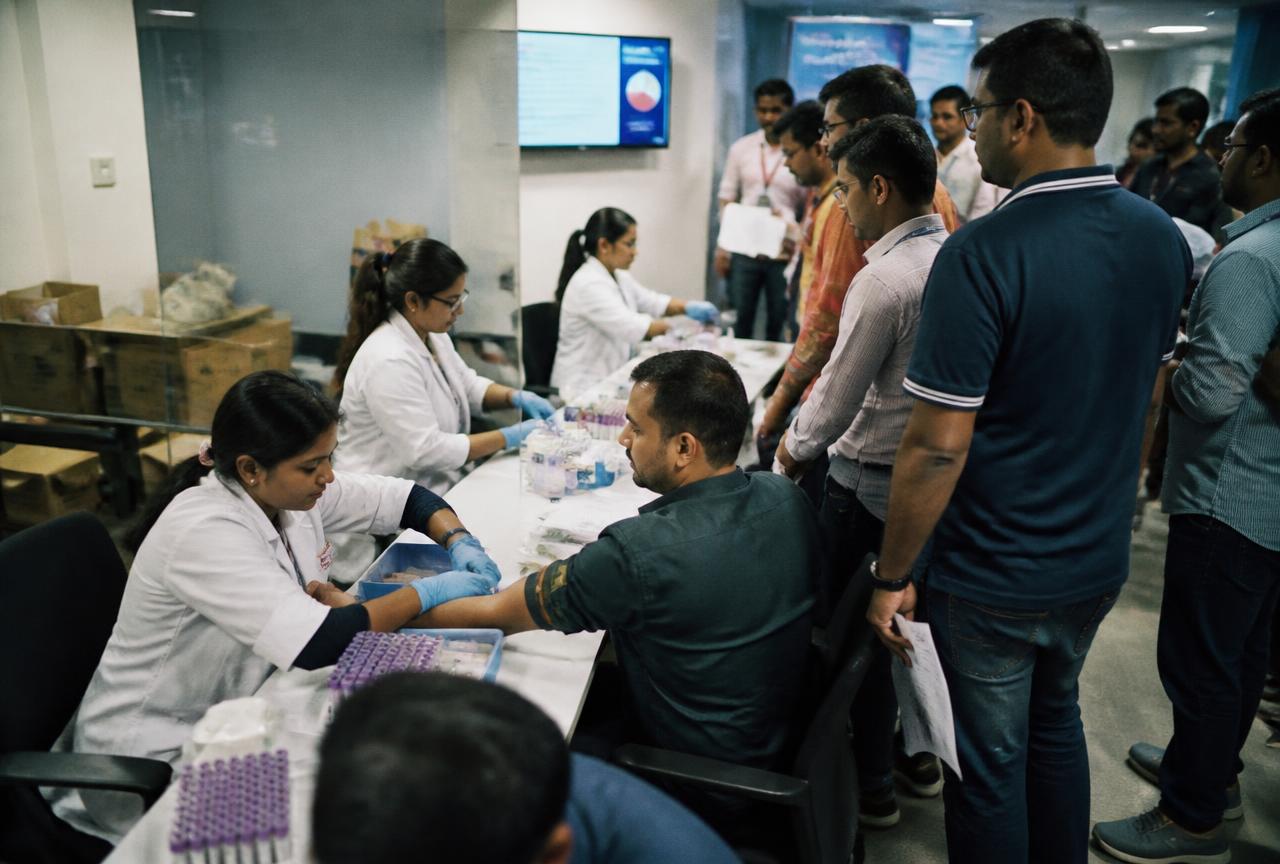
For restaurants, central kitchens, hotels and sweet chains, Aarvak can run medical camps on your premises at a time that works around service — typically between lunch and dinner shifts. Our team handles registration, physical examination by a doctor, sample collection, X-ray where required, reports and certificates. Learn about our corporate services or read how we plan on-site health camps.
Frequently Asked Questions
Is a medical fitness certificate mandatory for food handlers under FSSAI?
Yes. FSSAI's hygiene and sanitation requirements for licensed food businesses require food handlers to be medically examined at least once a year by a registered medical practitioner, with records maintained.
How often must food handlers get a medical checkup?
At least once a year, and before a new food handler starts work.
Which tests are included in a food handler medical examination?
Commonly a physical examination, stool examination and CBC, with typhoid screening, chest X-ray, HBsAg and urine routine as advised by the doctor or company policy.
Who can issue the food handler medical fitness certificate?
A registered medical practitioner (MBBS or above) issues the certificate after examination and review of the test results.
Can a food handler work with a cold or diarrhoea?
No. Staff with diarrhoea, vomiting, fever with sore throat, jaundice or infected skin lesions should be kept away from food handling until medically cleared.
Can Aarvak conduct food handler medicals at our restaurant?
Yes. Aarvak runs on-site medical camps for restaurants, hotels, caterers and central kitchens in Gurugram and Delhi NCR.
Book Food Handler Medicals for Your Team
Tell us your headcount and location, and we'll schedule an on-site camp or lab visits with consolidated certificates for your FSSAI file. Call +91 92663 33711 or email marketing@aarvakdiagnostics.com.
This article summarises general FSSAI hygiene requirements and is not legal advice. Refer to the current FSSAI regulations and your licensing conditions for the requirements that apply to your business.