Published Date
July 26, 2026
Author
Aarvak Diagnostics
Read Time
9 min
Category
Radiology
Joint Pain? When You Need an X-Ray — and Which Blood Tests to Do With It
Quick answer: An X-ray is useful for joint pain after an injury (to check for fracture), for pain lasting more than a few weeks, for suspected osteoarthritis (joint space narrowing, bone spurs), and for deformity or swelling. It shows bones and joint spaces but not soft tissues like ligaments or cartilage in detail (those need MRI or ultrasound). Blood tests help find the cause: uric acid (gout), RA factor and anti-CCP (rheumatoid arthritis), CRP and ESR (inflammation), and vitamin D and calcium (bone health). Seek urgent care for a hot, red, swollen joint with fever.
Knee pain in middle age, ankle sprains on weekend sports, hip pain in older parents, wrist and finger pain in the mornings — joint complaints are among the most common reasons people visit doctors. The right test depends on the pattern of pain.
When Is an X-Ray Needed?
- After an injury — fall, twist or blow — with swelling, deformity, inability to bear weight or tenderness over the bone
- Pain lasting more than 4–6 weeks without improvement
- Suspected osteoarthritis — gradual, activity-related knee or hip pain in people over 45
- Joint deformity or a visible change in shape
- Monitoring known arthritis or after surgery
When an X-Ray May Not Be Needed
- Mild, short-lived pain after exercise that improves with rest
- Muscle strain without bone tenderness
Your doctor decides — X-rays should be done when they change management.
What an X-Ray Shows
- Fractures and dislocations
- Osteoarthritis: joint space narrowing, bone spurs (osteophytes), bone hardening
- Signs of inflammatory arthritis: erosions in advanced rheumatoid arthritis
- Gout: changes in long-standing gout
- Bone density changes (though DEXA is the test for osteoporosis)
- Alignment of the joint
What It Doesn't Show Well
Ligament tears, cartilage damage, meniscus injuries and soft-tissue problems — these need MRI or ultrasound.
X-Rays Available at Aarvak
Aarvak's in-house digital X-ray service covers:
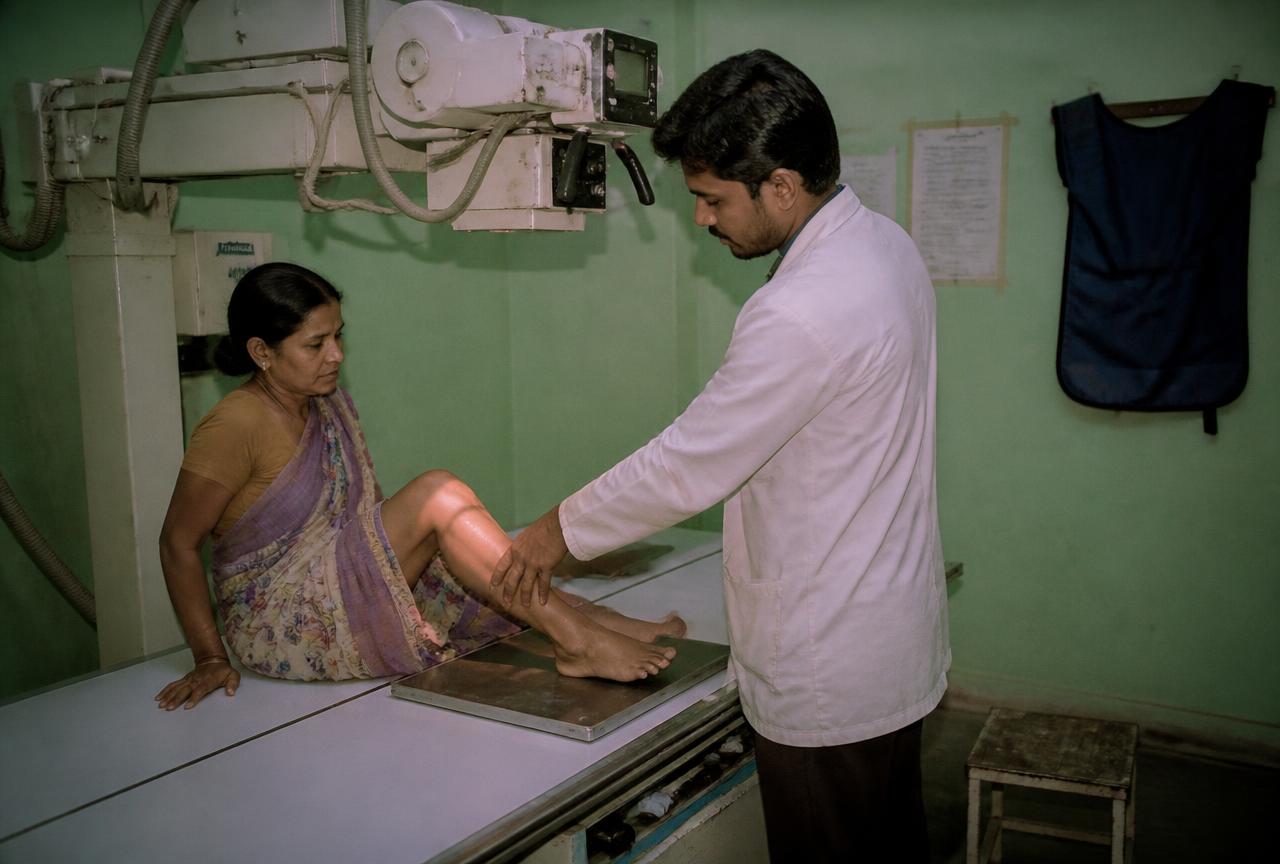
- Knee joint X-ray
- Hip joint X-ray
- Ankle joint X-ray
- Chest X-ray — see chest X-ray guide
We use digital radiography (Fuji CR) with a radiologist's report. See our X-ray services. For other body parts (wrist, hand, shoulder, spine) or for MRI and ultrasound, your doctor will refer you to an imaging centre that offers them — the blood tests below can still be done with us.
Blood Tests for Joint Pain
Uric Acid — For Gout
Sudden, severe pain and swelling — often in the big toe, ankle or knee — suggests gout. Note that uric acid can be normal during an attack, so your doctor may retest. See uric acid and gout.
RA Factor and Anti-CCP — For Rheumatoid Arthritis
Morning stiffness lasting more than 30 minutes, swelling of small joints of hands and feet on both sides, and fatigue suggest rheumatoid arthritis. Anti-CCP is more specific than RA factor. See our immunology tests.
CRP and ESR — Inflammation Markers
Raised in inflammatory arthritis and infection; usually normal or mildly raised in osteoarthritis. See CRP explained.
Vitamin D and Calcium
Low vitamin D causes bone and muscle aches that are often mistaken for joint pain. See vitamin D guide.
Other Tests in Specific Situations
- ANA — for suspected lupus or other autoimmune conditions
- HLA-B27 — for suspected ankylosing spondylitis (back pain and stiffness in young adults)
- CBC — infection, anaemia
- Thyroid — hypothyroidism can cause aches
- Chikungunya tests — post-monsoon joint pain after fever. See chikungunya vs dengue
Patterns That Point to the Cause
- Knee pain worse with stairs, better with rest, in someone over 45: osteoarthritis — X-ray helpful
- Sudden, very painful red big toe or ankle: gout — uric acid
- Morning stiffness, small joints of both hands: rheumatoid arthritis — RA factor, anti-CCP, CRP, ESR
- Joint pain after high fever with rash: chikungunya or other viral arthritis
- Widespread aches, fatigue, low mood: vitamin D deficiency, thyroid — blood tests
When to Seek Urgent Care
- A hot, red, swollen joint with fever — possible joint infection
- Inability to bear weight after injury
- Obvious deformity
- Numbness or loss of circulation below the injury
How to Prepare for an X-Ray
- No fasting needed
- Wear loose clothing; remove jewellery near the area
- Tell staff if you are or may be pregnant
- Bring previous X-rays for comparison
Frequently Asked Questions
When should I get an X-ray for knee pain?
After an injury with swelling or inability to bear weight, or for knee pain lasting more than four to six weeks, especially if osteoarthritis is suspected.
Can an X-ray show arthritis?
Yes. X-rays can show osteoarthritis changes such as joint space narrowing and bone spurs, and erosions in advanced inflammatory arthritis.
Which X-rays can I get at Aarvak?
Aarvak's in-house digital X-ray covers the knee, hip, ankle and chest. Other body parts, MRI and ultrasound need an imaging centre that offers them.
Can an X-ray show a ligament tear?
Not well. Ligament, cartilage and meniscus injuries usually need MRI or ultrasound.
Which blood test is done for joint pain?
Common tests include uric acid, RA factor, anti-CCP, CRP, ESR, vitamin D and calcium, depending on the pattern of pain.
Is fasting needed for a joint X-ray?
No. You don't need to fast for an X-ray.
How long does an X-ray report take at Aarvak?
X-ray images are taken in minutes and the radiologist's report is usually available the same day.
Book an X-Ray or Joint Tests in Gurugram
Digital X-rays and arthritis blood tests at Aarvak's Sector 67 centre. Book an X-ray or call +91 92663 33711. See also our radiology department.
This article is for general information only. Please consult your doctor for diagnosis and treatment of joint pain.