Published Date
September 2, 2026
Author
Aarvak Diagnostics
Read Time
8 min
Category
Respiratory Health
Gurugram Smog Season: Which Lung and Allergy Tests You Actually Need This Winter
Quick answer: If a cough, wheeze or breathlessness lasts more than three weeks during Gurugram's smog season, the most useful first tests are a Pulmonary Function Test (PFT / spirometry) to measure how well your airways move air, a chest X-ray to rule out infection or other lung changes, and a CBC with absolute eosinophil count plus total IgE to check for an allergic component. Most people need only one or two of these, and your doctor will pick based on your symptoms.
Every year between late October and January, Gurugram's Air Quality Index regularly sits in the "very poor" and "severe" bands. Stubble burning, vehicle exhaust, construction dust along the Dwarka Expressway and Golf Course Extension Road, and still winter air combine to trap fine particles (PM2.5) close to the ground. Those particles are small enough to travel deep into the lungs.
For most healthy adults the effect is irritation that settles once air clears. For others — people with asthma, COPD, allergies, older adults, children and anyone who smokes — the smog season is when lung problems either start or become obvious for the first time.
What Does Air Pollution Actually Do to Your Lungs?
PM2.5 and gases like nitrogen dioxide inflame the lining of your airways. In the short term that shows up as:
- A dry or tickly cough, often worse at night or early morning
- Throat irritation and a blocked or runny nose
- Chest tightness or wheezing, especially when you climb stairs or exercise outdoors
- Flare-ups of existing asthma or bronchitis
- Tiredness and headaches on high-AQI days
With repeated exposure across several winters, ongoing inflammation can narrow the airways. That is why doctors increasingly ask Gurugram patients with a "winter cough every year" to get their lung function measured rather than treating each episode with another cough syrup.
Which Tests Help — and What Does Each One Tell You?
Pulmonary Function Test (PFT / Spirometry)
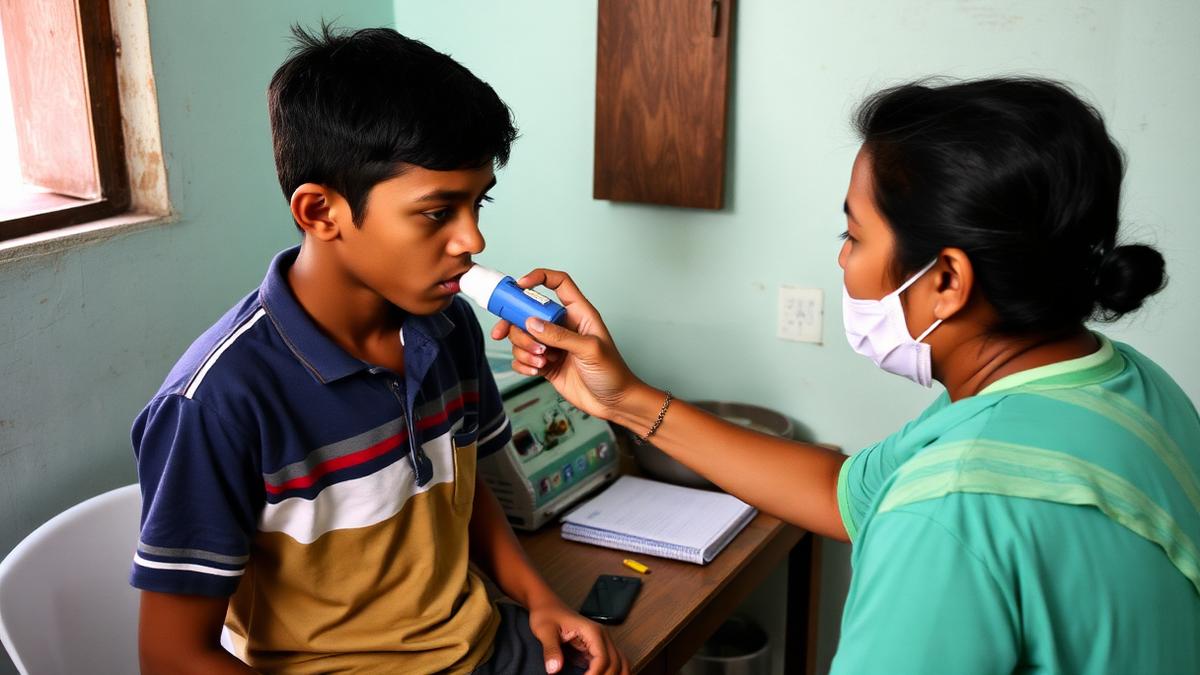
A PFT is a breathing test. You take a deep breath and blow out as hard and fast as you can into a mouthpiece connected to a spirometer. It measures:
- FEV1 — how much air you can force out in one second
- FVC — the total amount of air you can blow out
- FEV1/FVC ratio — a low ratio suggests the airways are narrowed (an obstructive pattern, seen in asthma and COPD)
If the result shows narrowing, the test is often repeated after an inhaler (bronchodilator). If the numbers improve significantly, that points towards asthma. The test is painless, needs no needles, and takes around 15–20 minutes. Read how a PFT works at Aarvak or see our guide on what a PFT tells you about breathlessness.
Chest X-Ray
A chest X-ray does not measure lung function, but it shows the structure — whether there is a patch of infection (pneumonia), fluid, an enlarged heart or other changes that need further evaluation. Doctors usually request it when a cough comes with fever, blood in sputum, weight loss, or has lasted more than three to four weeks. Aarvak performs digital X-rays with a radiologist's report.
CBC With Absolute Eosinophil Count (AEC)
Eosinophils are white blood cells that rise in allergic conditions. A raised eosinophil count alongside a winter cough supports an allergic or asthmatic cause rather than an infection. It is a simple blood test and is part of a Complete Blood Count.
Total IgE and Allergy Panels
Total IgE is a general marker of allergic tendency. If it is high and symptoms point to allergies, a specific IgE panel can identify triggers such as dust mites, pollen or moulds — useful because the "pollution cough" in many Gurugram homes is actually indoor dust-mite allergy made worse by smog. See our detailed guide to allergy testing.
Pulse Oximetry (SpO2)
A quick finger-clip reading of blood oxygen. It is a screening check, not a diagnosis, but a reading consistently below 94% at rest needs prompt medical attention.
Who Should Get Tested This Winter?
You should speak to your doctor about lung tests if you:
- Have a cough that has lasted more than three weeks
- Get breathless climbing one or two flights of stairs when you didn't before
- Wake up at night coughing or wheezing
- Have asthma and are using your reliever inhaler more than twice a week
- Smoke or have smoked, and are over 40
- Work outdoors — traffic police, delivery partners, construction and security staff
- Have a child who coughs every winter or after playing outside
Corporates with large outdoor or factory workforces can arrange on-site PFT screening through our corporate health camps.
What Testing Will Not Do
Lung tests will not "detox" your lungs or measure the pollution you have inhaled. Their job is to tell you and your doctor whether your airways are healthy, narrowed or reacting to allergens — so treatment can be targeted. Avoid buying panels you don't need; if you are unsure, call us and our team will tell you what your doctor's prescription actually requires.
Practical Steps for Gurugram Residents on High-AQI Days
- Check the AQI before outdoor exercise and move workouts indoors when it is above 200
- Use a well-fitted N95 mask outdoors; cloth and surgical masks do little against PM2.5
- Run an air purifier in the bedroom and keep windows closed during peak hours (early morning and late evening)
- Keep asthma inhalers with you and follow your doctor's action plan
- Avoid burning incense, mosquito coils and firecrackers indoors
- Drink enough water — it keeps airway secretions thinner and easier to clear
Preparing for a PFT at Aarvak
- Avoid smoking for at least 4–6 hours before the test
- Avoid a heavy meal two hours before
- Wear loose clothing that doesn't restrict your chest
- Ask your doctor whether to skip your inhaler on the morning of the test — do not stop medication on your own
- Bring your prescription and any previous PFT reports for comparison
Frequently Asked Questions
Can air pollution cause asthma in adults?
Long-term exposure to polluted air is linked to new-onset asthma and worsens existing asthma. A PFT with a bronchodilator test is the standard way to confirm asthma.
Is a chest X-ray enough to check lung damage from pollution?
No. A chest X-ray shows structure, such as infection or fluid, but it cannot measure airflow. A PFT is the test that measures how well your lungs work.
How long does a PFT take and is it painful?
A PFT takes about 15–20 minutes and is completely painless. You only need to breathe into a mouthpiece following the technician's instructions.
Which blood test shows allergy?
A CBC with absolute eosinophil count and a total IgE test are the common first blood tests for allergy. Specific IgE panels then identify individual triggers.
Should children get lung tests during the smog season?
Children with a recurring winter cough, wheeze or breathlessness should be evaluated by a paediatrician, who may advise spirometry for children old enough to perform it (usually 6 years and above).
Do I need a doctor's prescription for a PFT in Gurugram?
A prescription is recommended so the test is interpreted against your symptoms, but you can call Aarvak to discuss and book.
Book a Lung Function Test in Gurugram
Aarvak Diagnostics performs PFT, digital chest X-ray and allergy blood tests at our Sector 67 lab on the Sohna Road – Golf Course Extension Road belt, with blood sample collection at home across nearby sectors. Book a PFT test, book a chest X-ray or call +91 92663 33711 to speak to our team.
This article is for general information and does not replace medical advice. Please consult your doctor about your symptoms.