Published Date
October 8, 2026
Author
Aarvak Diagnostics
Read Time
8 min
Category
Infectious Diseases
Burning Urine? Urine Routine vs Urine Culture — Which UTI Test You Need
Quick answer: A urine routine and microscopy test gives a quick picture — pus cells, nitrites, blood and other signs that suggest a urinary tract infection (UTI). A urine culture and sensitivity test grows the actual bacteria and tells your doctor which antibiotic will work. A routine test is often enough for a first, simple UTI; a culture is recommended for repeated UTIs, UTIs in pregnancy, men, children, people with diabetes, fever or back pain, and whenever symptoms don't improve on antibiotics. Give the sample before starting antibiotics.
UTIs are among the most common infections we test for at Aarvak. Women are far more likely to get them because of a shorter urethra, and many women in Gurugram experience repeat episodes — often treated with antibiotic after antibiotic without a culture. That approach is one of the main reasons UTI bacteria are becoming harder to treat.
Symptoms of a UTI
- Burning or pain while passing urine
- Needing to urinate often, urgently, or in small amounts
- Cloudy, strong-smelling or blood-tinged urine
- Lower abdominal discomfort
Warning signs of a kidney infection — see a doctor the same day: fever with chills, pain in the back or side (flank), nausea or vomiting.
Urine Routine and Microscopy — What It Shows
A urine routine (sometimes called urine R/M) examines the sample physically, chemically and under a microscope:
- Pus cells (WBC): raised numbers suggest infection or inflammation
- Nitrite: positive when certain bacteria convert nitrates — supports a bacterial UTI
- Leukocyte esterase: an enzyme from white cells, another infection marker
- Red blood cells: blood in urine can be due to infection, stones or other causes
- Bacteria: seen on microscopy, but contamination can also show bacteria
- Protein, sugar, ketones, pH and specific gravity: clues to kidney health, diabetes and hydration
Results are typically ready the same day. Read our guide to understanding urine analysis results.
Limitation: a routine test suggests an infection but cannot tell which bacteria is responsible or which antibiotic will work.
Urine Culture and Sensitivity — What It Adds
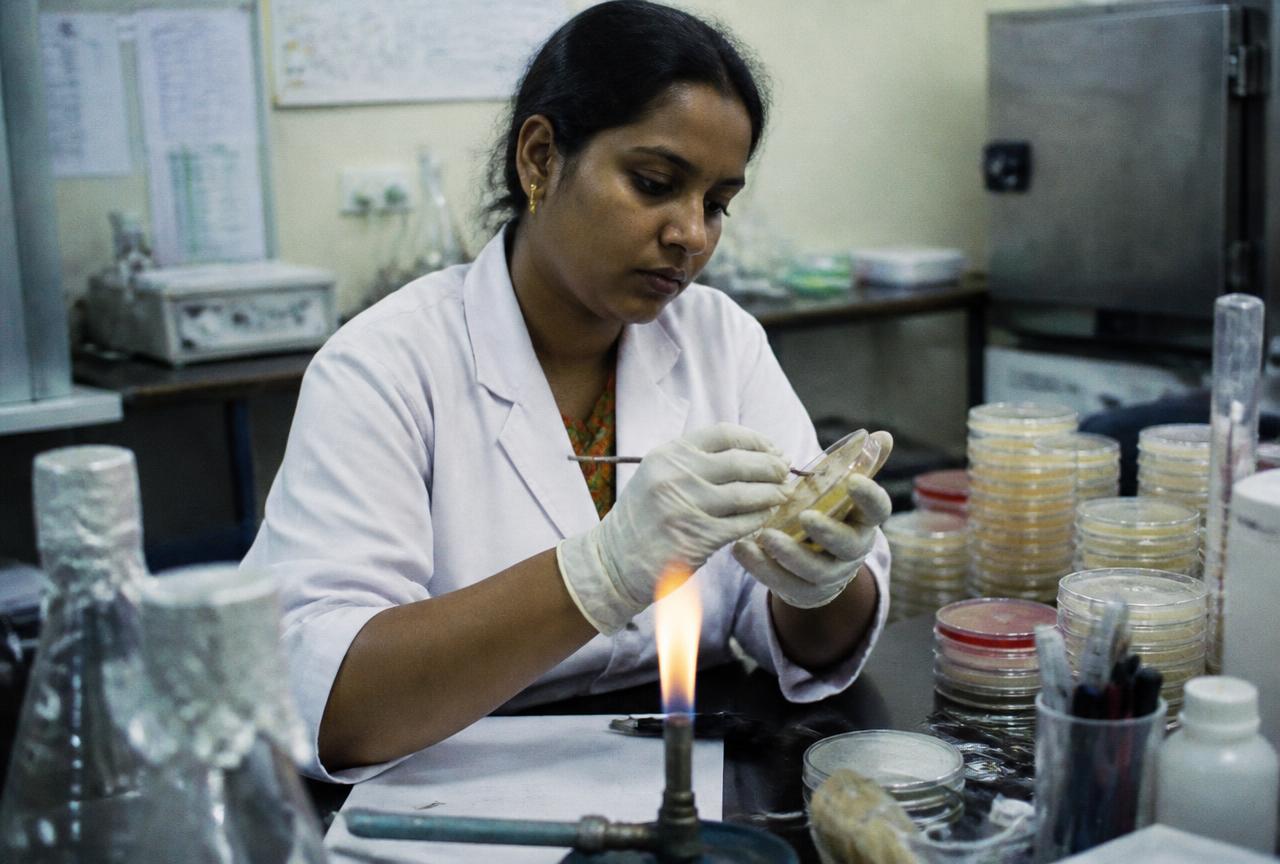
- The sample is placed on culture media to grow bacteria
- A significant count (commonly 100,000 colony-forming units per mL or more in a clean midstream sample, though lower counts can be significant with symptoms) confirms infection
- The organism is identified — E. coli causes most UTIs
- Sensitivity testing shows which antibiotics the bacteria respond to and which they resist
- Results usually take 48–72 hours
Aarvak's microbiology department performs urine culture and sensitivity testing.
When Should You Get a Urine Culture?
- Three or more UTIs in a year, or two in six months
- UTI during pregnancy (also, routine screening in pregnancy — see our pregnancy tests guide)
- UTI in men or children
- Fever, back pain or signs of kidney infection
- Diabetes, kidney disease or a weakened immune system
- Symptoms that persist or return after an antibiotic course
- A urinary catheter, recent hospital stay or recent urinary procedure
How to Give a Clean Urine Sample
Contamination from skin is the most common reason for confusing results. Follow these steps:
- Use the sterile container provided by the lab — don't use a household bottle
- Collect the first-morning urine if possible, or urine that has been in the bladder for at least 3–4 hours
- Wash your hands, then clean the genital area with water (front to back for women)
- Pass the first part of the stream into the toilet, then collect the middle part in the container — the "midstream clean catch"
- Close the lid tightly without touching the inside
- Deliver the sample to the lab within one hour, or refrigerate it if there will be a delay (don't freeze)
- Tell the lab if you are menstruating or have already started antibiotics
For home collection, our phlebotomist provides a sterile container and collects it from you.
Preventing Repeat UTIs
- Drink enough water through the day — urine should be pale yellow
- Don't hold urine for long periods, a common problem in long office meetings and commutes
- Urinate after intercourse
- Wipe front to back
- Avoid scented washes and douches
- If you have diabetes, keep sugars controlled — high sugar in urine encourages infection
- Ask your doctor about a structured plan for recurrent UTIs rather than self-medicating
Frequently Asked Questions
Which test confirms a urine infection?
A urine culture confirms a UTI by growing the bacteria and identifying it. A urine routine test can strongly suggest infection but does not confirm the organism.
How long does a urine culture report take?
A urine culture and sensitivity report usually takes 48 to 72 hours.
Can I take antibiotics before a urine culture?
It's best to give the urine sample before starting antibiotics. Antibiotics can stop bacteria from growing in the culture and make the result falsely negative.
What is a normal pus cell count in urine?
Generally 0–5 pus cells per high-power field is considered normal. Higher counts suggest infection or inflammation and should be interpreted with symptoms.
Why do I keep getting UTIs?
Common reasons include not drinking enough water, holding urine, intercourse, menopause-related changes, diabetes and incomplete treatment. Recurrent UTIs should be evaluated with a urine culture.
Can a urine sample be collected at home?
Yes. Aarvak provides a sterile container and collects urine samples at home in Gurugram along with any blood tests.
Book a Urine Test in Gurugram
Aarvak offers urine routine, urine culture and sensitivity, and kidney function tests at our Sector 67 lab with home collection across nearby sectors. Call +91 92663 33711 or book a test.
This article is for general information only. Please see a doctor for diagnosis and treatment of urinary symptoms.